By Peggy Arthur
Greetings readers, writers, and everyone in between. Please remember you are always welcome here.
I’m currently rewriting and editing Chapters 5 & 6 of The Pretender’s Game, and this chapter will include selected material from the original manuscript. As I’ve worked through the first four chapters, I’ve approached the book with a clear understanding of its three-act structure, using portions of the original draft where they still serve the story. What is service you ask? Movement, portions that move the plot forward.
So far, those four chapters have drawn from roughly two chapters of the original manuscript. If I continue at this pace, reworking content in similar segments, it suggests that I may ultimately be rewriting about half of the book.
That’s the working theory, and I’ll be testing it in the coming weeks. That said, I won’t reveal the number of chapters based upon this theory. I’ll keep this number in mind. Perhaps I’ll write it and seal it in an envelope for a dramatic reveal!
My goal is to complete this rewrite before the Fourth of July, which is approaching quickly. Ironically, we’ll end the book with a bang…
As I move upward through the arc toward the midpoint, I’m also intentionally refining tone and mood, two elements I studied closely while working on Chapter 4. These are not just atmospheric choices; they are tools a bit like the magician’s wand. They shape how the reader feels, how tension builds, and how each scene lingers. Now, in Chapter 5 and beyond, I’m applying those tools with more precision, making sure the emotional undercurrent of the story rises in step with the plot. We’ve been told to mind our tone and our mood, but what does this mean on the page? It is the process of evoking emotions with the written word.
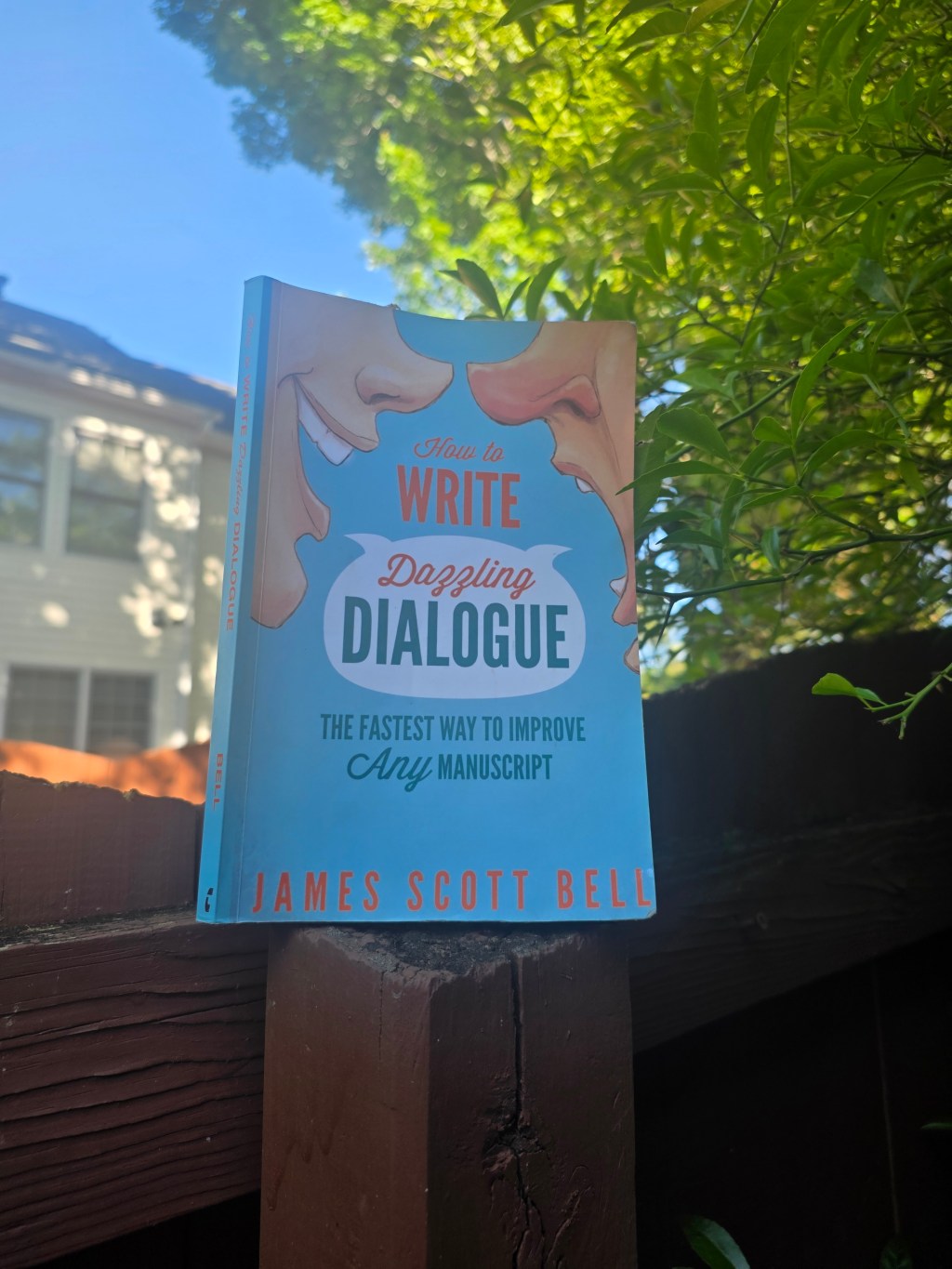
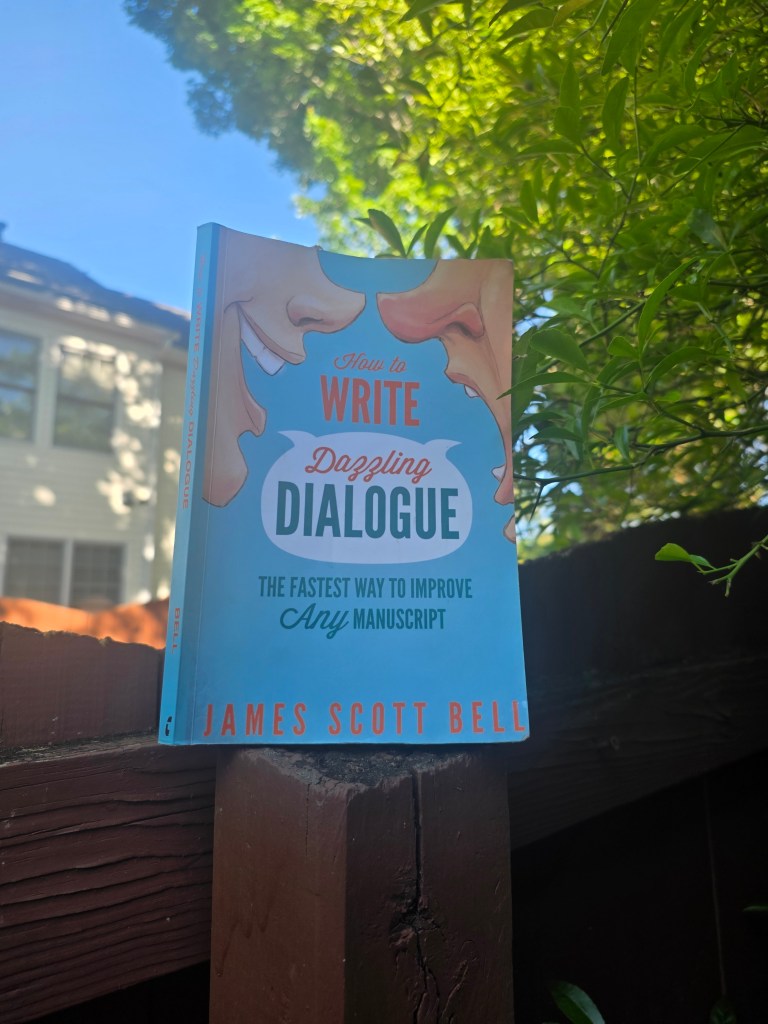
Alongside this process, I’ve been strengthening one of the most critical elements of storytelling: dialogue. I’ve been using How to Write Dazzling Dialogue: The Fastest Way to Improve Any Manuscript by James Scott Bell as a key resource, and it has been both practical and clarifying.
One section I’m especially grateful for is the breakdown of the top ten dialogue issues, which I’ll be using as a reference point moving forward. It covers essential areas like punctuation, attributions, adverbs, action tags, dialects, backstory, inner dialogue, experimental techniques, cursing, and more. Having these categories clearly defined gives me a framework to evaluate and refine each scene with intention, rather than relying on instinct alone.
Bell makes a compelling case that dialogue is one of the fastest ways to improve a manuscript. His approach breaks it down into clear, usable components: dialogue should reveal character, advance the story, and carry tension in every exchange. What stands out most is how actionable the guidance is. From developing a sharper ear for character voice to using subtext, conflict, and interruption, the techniques are straightforward but impactful.
What I appreciate most is that the book doesn’t feel overly theoretical. It’s concise, example-driven, and immediately applicable. It reinforces the idea that strong dialogue isn’t just about what characters say, but what they avoid, conceal, or struggle to express.
As I continue revising Chapter 5, I’m applying these lessons in real time by tightening exchanges, sharpening character voices, and ensuring every line of dialogue is doing meaningful work, all while maintaining the tone and mood that carry the story forward.
My editor told me she was pleased with the progress of the rewrites. I owe it all to flow. I believe understanding dialogue is the cheat code to unlocking flow which is a magnetic force that attracts the words to you and you to the words. Cheers to finding flow!
🌿 Join the Conversation
If you’re a writer, revising a manuscript, or following along with The Pretender’s Game, stay connected. And if there’s a craft element you’re focusing on right now—dialogue, tone, pacing—I’d love to hear what’s shaping your work.
✨ Step into the circle. The story is still unfolding.
📩 Subscribe below and step into the circle of readers and storytellers.
#AmWriting #WritingCommunity #WritingCraft #DialogueWriting #BehindtheBook #AuthorLife #IAMWriting #Author #Writing #Editing #Flow


Leave a Reply